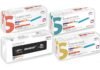
Eli Lilly and Company has announced positive topline results from Triumph-1, a Phase 3 clinical trial evaluating the efficacy and safety of retatrutide, an investigational, first-in-class GIP, GLP-1, and glucagon triple hormone receptor agonist, in adults with obesity or overweight and at least one weight-related comorbidity and without diabetes.

At 80 weeks, all doses of retatrutide (4 mg, 9 mg, and 12 mg) met the primary and key secondary endpoints for obesity, delivering clinically meaningful weight loss.

“Obesity is a chronic disease, and people living with obesity deserve treatment options that match the complex biology of their neurometabolic disease,” said Ania Jastreboff, professor of medicine and pediatrics (Endocrinology) at the Yale School of Medicine, director of the Yale Obesity Research Center (Y-Weight), and lead investigator.
“It was impressive to see that every dose of retatrutide resulted in clinically meaningful weight reduction for nearly all participants, and people with severe obesity on the highest dose lost on average 30% of their body weight over two years. Importantly, treatment with retatrutide not only resulted in robust weight reduction, but also in clear improvements in assessed cardiometabolic health measures. For patients I see in clinic, retatrutide may potentially be a highly impactful future tool to treat their obesity and transform their health trajectory.”
For the primary endpoint, participants taking retatrutide 9 mg and 12 mg lost an average of 29.2 kg (25.9%) and 31.9 kg (28.3%), respectively. Those taking the 4 mg dose of retatrutide, with just a single dose escalation step, lost an average of 21.4 kg (19.0%). Notably, 65.3% of participants taking retatrutide 12 mg achieved a BMI <30, falling under the threshold for obesity at 80 weeks, including 37.5% of those who started with class 3 obesity (BMI ≥40).1
In a pre-specified blinded extension for those with a BMI ≥35, participants who continued on retatrutide 12 mg to 104 weeks lost an average of 38.5 kg (30.3%).2 Additionally, retatrutide showed significant improvements from baseline across certain cardiovascular risk factors, including waist circumference, non-HDL cholesterol, triglycerides, systolic blood pressure and high-sensitivity C-reactive protein (hsCRP).
The types of adverse events seen were generally consistent with trials of other incretin-based therapies. The most common adverse events among participants treated with retatrutide (4 mg, 9 mg, 12 mg, vs. placebo, respectively) were nausea (28.6%, 38.4% and 42.4% vs. 14.8%), diarrhea (25.2%, 34.1% and 32.0% vs. 13.5%), constipation (23.8%, 25.9% and 26.1% vs.10.9%), vomiting (10.6%, 22.8% and 25.3% vs. 4.8%), and upper respiratory tract infection (14.2%, 12.2% and 13.1% vs. 11.6%).
Incidences of dysesthesia occurred in 5.1%, 12.3%, and 12.5% of patients treated with retatrutide 4 mg, 9 mg, and 12 mg, respectively, compared with 0.9% with placebo, and incidences of urinary tract infections occurred in 7.5%, 8.8%, and 8.4% of patients treated with retatrutide 4 mg, 9 mg, and 12 mg, respectively, compared with 5.3% with placebo. Events of dysesthesia and urinary tract infections were generally mild to moderate, the majority resolved during treatment, and most participants continued taking retatrutide. Discontinuation rates due to adverse events were 4.1%, 6.9%, 11.3%, with retatrutide 4 mg, 9 mg, and 12 mg, respectively, compared with 4.9% with placebo.
Additional Triumph-1 results will be presented at the 86th annual American Diabetes Association Scientific Sessions, along with other results from Lilly’s cardiometabolic pipeline. Additional detailed results will be presented at future medical meetings and published in peer-reviewed journals. More results from the Triumph Phase 3 clinical trial program will be shared later this year, including data from Triumph-2, which is evaluating retatrutide in adults with obesity or overweight and type 2 diabetes, and Triumph-3, which is evaluating retatrutide in adults with obesity or overweight and established cardiovascular disease.