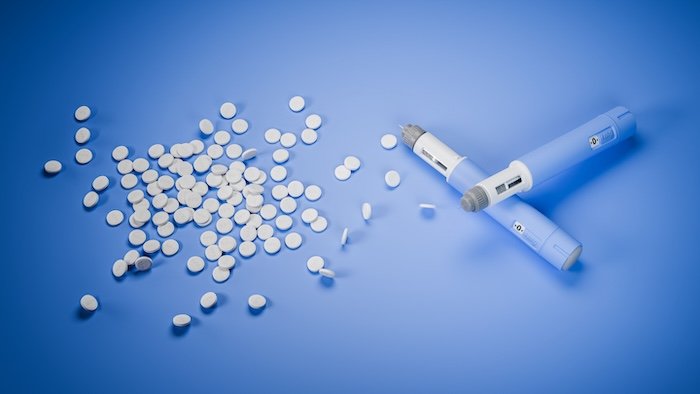
Eli Lilly and Company have announced detailed results from three Phase 3 trials in the Achieve program evaluating orforglipron, a small molecule oral GLP-1 taken without food or water restrictions, in adults with type 2 diabetes.

In the head-to-head Achieve-3 trial, orforglipron outperformed oral semaglutide across the primary and all key secondary endpoints. In Achieve-2 and Achieve-5, orforglipron met the primary endpoint and key secondary endpoints, delivering superior A1C reduction and weight loss versus dapagliflozin and placebo added to insulin glargine respectively.

Results from Achieve-3, Achieve-2 and Achieve-5 were presented at the American Diabetes Association (ADA) 86th Scientific Sessions. Achieve-3 was previously published in The Lancet, while Achieve-2 and Achieve-5 were published in The Lancet and JAMA, respectively.
“Achieve-3 provides the first head-to-head data on oral GLP-1s in type 2 diabetes, with orforglipron showing greater A1C and weight reductions than oral semaglutide, which was tested at approved diabetes doses,” said Dr. Julio Rosenstock, clinical professor of medicine at the University of Texas Southwestern Medical Center and Achieve-3 lead investigator.
“That level of efficacy is reinforced in Achieve-2 and Achieve-5, demonstrating a consistent and robust treatment effect across a wide spectrum of patient populations. These results support a potential shift toward using oral GLP-1 receptor agonist therapies like orforglipron earlier as a foundation of type 2 diabetes care.”
In Achieve-3, orforglipron 9 mg and 17.2 mg outperformed oral semaglutide 7 mg and 14 mg in the first and only head-to-head Phase 3 trial of two oral GLP-1 receptor agonists for type 2 diabetes.3 Orforglipron lowered A1C by an average of 1.9% (9 mg) and 2.2% (17.2 mg) compared to 1.1% (7 mg) and 1.4% (14 mg) with oral semaglutide at 52 weeks, a 57.1% greater relative reduction at the highest dose comparison. More patients taking the highest dose of orforglipron Achieved an A1C <5.7% (37.1% vs 12.5%), the threshold for normal blood sugar levels.
Orforglipron also delivered greater weight loss, with patients losing an average of 6.6 kg (6.7%; 9 mg) and 8.9 kg (9.2%; 17.2 mg) compared to 3.6 kg (3.7%; 7 mg) and 5.0 kg (5.3%; 14 mg) with oral semaglutide, a 73.6% greater relative weight loss at the highest dose comparison.
In Achieve-2, orforglipron delivered superior results, lowering A1C by up to an average of 1.7% compared to 0.8% with dapagliflozin at 40 weeks from an average baseline of 8.1%. Up to 68.6% of patients taking the highest dose of orforglipron Achieved an A1C ≤6.5%, the level recommended for more intensive blood sugar control, compared to 21.6% with dapagliflozin. Participants taking orforglipron lost an average of 3.2 kg (3.5%; 2.5 mg), 5.8 kg (6.3%; 9 mg), and 6.8 kg (7.3.%; 17.2 mg) versus 2.7 kg (3.0%) with dapagliflozin.
In Achieve-5, orforglipron demonstrated significant improvements compared to placebo added to titrated insulin glargine. Orforglipron lowered A1C by up to an average of 2.1% compared to 0.8% with placebo at 40 weeks from an average baseline of 8.5%. Up to 69.1% of patients taking orforglipron 9 mg Achieved an A1C ≤6.5% compared to 11.1% with placebo. Participants taking orforglipron lost an average of 2.2 kg (2.7%; 2.5 mg), 5.0 kg (5.8%; 9 mg), and 5.2 kg (6.1%; 17.2 mg) compared to a 0.5 kg (0.6%) gain with placebo.
“When we look across the Achieve program, orforglipron consistently demonstrated superior A1C control and weight loss, giving us real confidence in what it could deliver for patients,” Thomas Seck, senior vice president of product development, Lilly Cardiometabolic Health.
“Achieve-3 marks the first time two oral GLP-1 therapies have been tested head-to-head in a Phase 3 study, and orforglipron clearly outperformed oral semaglutide on the outcomes that matter most to patients with type 2 diabetes. For the millions of people with type 2 diabetes who want an oral treatment they can take any time of day, orforglipron has the potential to be an attractive first-line therapy option in primary care.”
Across all three trials, orforglipron showed clinically meaningful improvements from baseline across key cardiovascular risk factors, including non-HDL cholesterol, HDL cholesterol, VLDL cholesterol, total cholesterol, systolic blood pressure and triglycerides.
The overall safety and tolerability profile of orforglipron, including treatment discontinuation rates, was consistent with previous studies. Across the three trials, the most common adverse events were gastrointestinal, including nausea, diarrhea, vomiting, dyspepsia and decreased appetite.
Treatment discontinuation rates due to adverse events were 8.7% and 9.7% with orforglipron 9 and 17.2 mg vs. 4.5% and 4.9% with oral semaglutide in Achieve-3; 9.2%, 10.8%, and 12.4% with 2.5, 9, and 17.2 mg vs. 1.2% with dapagliflozin in Achieve-2; and 3.6%, 7.6%, and 9.6% with 2.5, 9, and 17.2 mg vs. 3.6% with placebo in Achieve-5. Based on these findings, as well as those from Achieve-1 and Achieve-4, Lilly plans to submit orforglipron for the treatment of type 2 diabetes to the U.S. FDA by the end of the second quarter under the Commissioner’s National Priority Review Voucher.