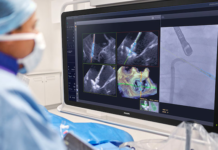
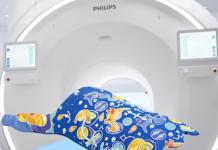
Royal Philips, a global name in health technology, has announced the launch of Verida, the world’s first detector-based spectral CT fully powered by AI. This marks a transformative milestone in CT, with AI optimizing the entire imaging chain – lowering system noise, elevating image quality, and accelerating clinical workflow.

With over 800 global installations and supported by over 800 peer-reviewed publications, Philips’ spectral CT uses PACS-native delivery and has been fully embedded into clinical workflow. Spectral CT measures how tissues absorb different x-ray energy levels, enabling differentiation of materials that appear identical on conventional CT. Philips has pioneered detector-based spectral CT, delivering multiple spectral results from a single scan with no tradeoffs in performance or scan time.

Now, by integrating AI across the imaging chain, from acquisition to reconstruction, Philips Verida generates industry-leading, superior spectral image quality with minimal noise, in addition to high-definition conventional images. With its full AI capabilities, Verida can achieve dramatic dose reduction without compromising image quality and reduce energy consumption by up to 45%.
“The clinical benefits of Verida will fundamentally change my approach to cardiac imaging,” said Prof. Eliseo Vañó Galván, cardiovascular radiologist, Chairman of the CT & MR Department at Hospital Nuestra. Sra. Del Rosario, Madrid, Spain. “With more comprehensive insights in every cardiac CT, I plan to make spectral imaging routine for all patients – building toward a fully spectral CT department. We evaluated many systems, including photon-counting CT, but chose Philips because it delivers the precision we need in a streamlined, easy-to-use platform. The result is greater diagnostic confidence and the potential to reduce the need for invasive angiograms – not just in cardiology, but across other clinical areas as well.”
Verida reconstructs 145 images per second, so entire exams automatically appear in less than 30 seconds – 2× faster than before and enabling up to 270 exams every day. Building on Philips’ proprietary Spectral Precise Image technology – a deep learning AI reconstruction engine combined with advanced spectral imaging – and its third-generation Nano-panel Precise dual-layer detector with intrinsic noise reduction optimized for AI, Verida is designed to deliver faster, more dose-efficient spectral reconstructions. This enables clinicians to access rich spectral information from a single scan.
“Combining the latest advances in our proven spectral CT technology with AI, our flagship Verida CT system is designed to set a new standard in superior image quality and accelerated scans which are fully embedded in the radiology workflow, all to help clinicians detect and characterize disease earlier, reduce variability in diagnoses, and support efficient treatment pathways – in a single scan,” said Dan Xu, Business Leader of CT at Philips.
“While photon-counting CT adds complexity, is yet to move from the research arena into clinical practice, Philips spectral CT has been a clinical workhorse for more than a decade and delivers comparable or better clinical outcomes, standing up to the most demanding throughput and at significantly lower total cost of ownership”.
Verida extends Philips’ software-defined CT approach, pairing AI-driven spectral precision to advance both clinical and operational outcomes. Built for high-demand environments, it streamlines workflows, reduces repeat scans, and delivers consistently sharp imaging across all care pathways.