NADMED, a Finnish biotechnology company specializing in the precision measurement of redox metabolites, has selected a research project from the Schlegel Lab at Cleveland Clinic in Ohio, which could improve how donor organs are preserved and assessed before transplantation, as the first recipient of the US$30,000 NADMED Award. The winning project, led by Dr. Keyue Sun, was selected by NADMED’s newly established Scientific Advisory Board of international experts in metabolism and mitochondrial medicine.

The awarded research investigates metabolic organ quality during ischemia and the impact of different machine perfusion strategies using NAD/NADH redox profiling, a technically demanding area that has long lacked reliable measurement tools. This phase is critical in transplantation, where determining whether an organ is viable can directly impact patient outcomes.

The findings are expected to improve how transplant teams assess organ viability and contribute to the development of more effective assessment methods in transplant medicine.
“We are grateful to receive this support from NADMED, which enables us to further expand the scope of our organ viability testing from mitochondrial complex I injury (assessed through flavin mononucleotide [FMN]) to complex I function, both key drivers of ischemia–reperfusion injury and critical determinants of transplant outcomes,” said Dr K. Sun.
“I believe this grant, and the collaboration with NADMED, are highly relevant for advancing the field of transplantation by strengthening the mechanistic understanding of mitochondrial injury and improving viability assessment,” added professor Andrea Schlegel, who leads mitochondrial transplant research at Cleveland Clinic.
The newly assembled SAB served as the scientific jury that evaluated and selected the winning project, assessing proposals based on scientific merit, clinical relevance, and the potential to advance understanding of redox biology in real-world settings. The board is led by professor Charles Brenner (City of Hope), professor Rita Horvath (University of Cambridge), and Dr. Helen Messier (Bioscope.ai).
“The winning proposal stood out for its strong scientific foundation, clinical relevance, and translational potential,” the jury commented. “Its approach to identifying NAD/NADH patterns for organ assessment shows clear potential to improve decision-making in transplantation.”
“I greatly appreciate that these projects apply redox biology to solve important clinical questions,” said professor Charles Brenner. “I believe that NADMED kits will substantively advance clinical translation of NAD and glutathione biology to produce important diagnostics, improve research, and guide therapeutic development.”
The selection of the Cleveland Clinic project highlights growing interest in translating advances in redox biology into clinical applications, particularly in organ preservation, where metabolic processes directly affect outcomes.
The NADMED Award was created to support precisely this type of work: research that not only advances scientific understanding but also has the potential to improve patient outcomes.
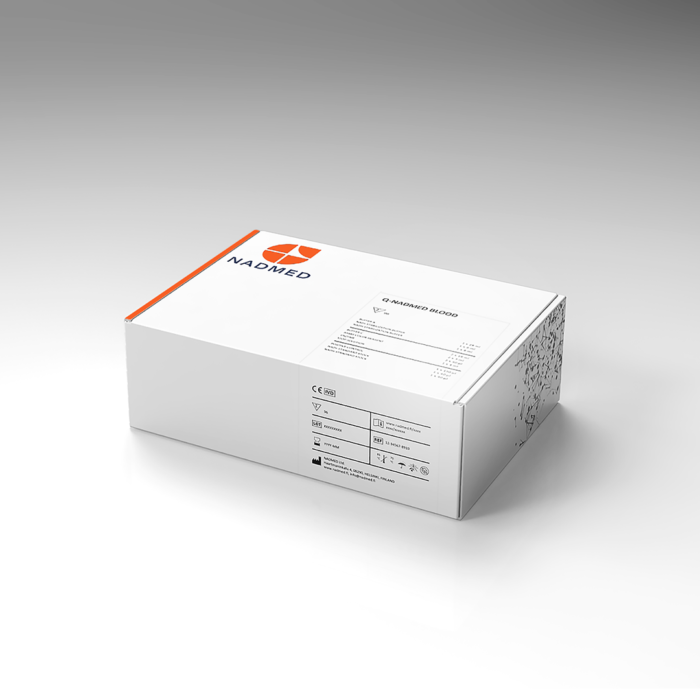
Founded in 2022 as a spinout from the University of Helsinki, NADMED has developed the first CE-marked diagnostic solution that measures all four nicotinamide adenine dinucleotide (NAD) coenzymes directly from biological samples, including fresh blood. Mitochondrial dysfunction, altered NAD metabolism, and disrupted redox balance are increasingly linked to a wide range of conditions, from rare genetic disorders to neurological diseases and chronic conditions, yet remain opaque with existing clinical tools.
By establishing a Scientific Advisory Board and enabling it to act as the jury for the NADMED Award, NADMED aims to connect leading scientific expertise directly with high-impact research initiatives. The global market for metabolomics and redox-metabolite diagnostics is projected to grow from around US$ 4.3 billion in 2025 to US$ 14.4 billion by 2034.
“We wanted to ensure that the projects we support are selected and guided by the leading experts in the field,” says Jari Närhi, CEO of NADMED. “By combining scientific leadership with targeted support for research, we can help accelerate the translation of redox biology into clinical practice.”