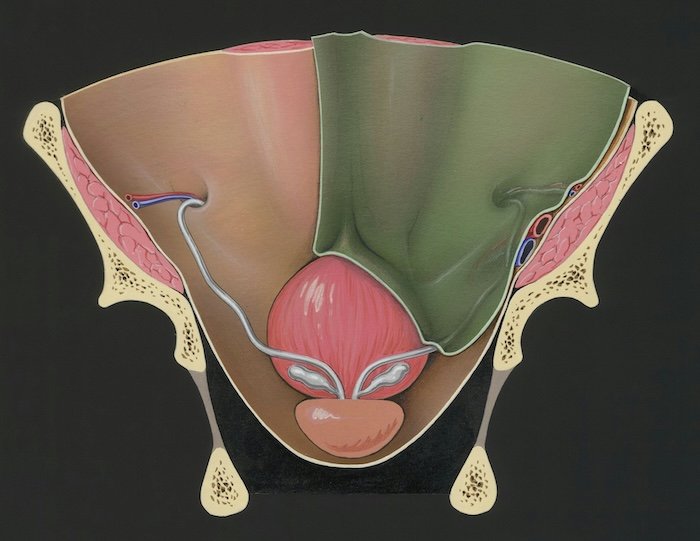
Uterine cancer is most often a cancer arising from the lining of the uterus. It is called endometrial cancer. It predominantly affects postmenopausal women, although an increasing number of younger women are being diagnosed. Importantly, when detected early, uterine cancer has an excellent prognosis.

The early warning signs are – Bleeding or spotting after attaining menopause; Bleeding between menstrual periods; Heavy or prolonged menstrual bleeding; and Persistent watery or blood-stained vaginal discharge.

Some of these symptoms can be caused by a benign condition such vaginitis; however, it needs to be checked by a doctor.
As an oncologist, my advice to all would be that any postmenopausal bleeding should always be evaluated promptly.
Obesity is the single most important modifiable risk factor. Obesity is being increasingly linked to a plethora of cancers and can well be the bane of our generation.
The other risk factors associated with Endometrial cancer are prolonged estrogen exposure (in women with early menarche and late menopause), h/o polycystic ovarian syndrome, and metabolic disorders. There are some hereditary syndromes, such as Lynch syndrome, that predispose women to endometrial and colon cancers
When a patient presents with symptoms suggestive of uterine malignancy, a scan such as a Transvaginal or transabdominal ultrasound is done to assess endometrial thickness. If the Measurement is higher than expected, an Endometrial biopsy is done. In some patients, a hysteroscopy might be required. If cancer is diagnosed, more detailed imaging, such as an MRI or CT scan, might be required.
If the cancer is diagnosed early, sometimes a laparoscopic or robotic-assisted hysterectomy with lymphadenectomy can be the entire treatment. The patient can go home the following day, cancer-free!
Molecular classification is changing the landscape of endometrial cancer. It is one of the greatest examples of precision oncology. It has truly transformed treatment decisions. Even patients with advanced or recurrent disease have multiple treatment options. The tumors exhibiting mismatch repair deficiency (dMMR) or microsatellite instability (MSI-H) have shown remarkable responses to immunotherapy.
Genetic profiling helps identify patients who may benefit from targeted therapies and immunotherapy. Identifying Lynch syndrome mutations can alert the oncologists to the possibility of secondary cancers and stricter surveillance.
Early detection saves lives. But several lifestyle modifications can reduce the risk of uterine cancer altogether.
In today’s world, as preventive oncology gains importance, it is essential to maintain a healthy body weight and engage in regular physical activity. Even a regular brisk walk for half an hour, five days a week, is beneficial.
One must adopt a balanced diet rich in fruits, vegetables, whole grains, and fiber. It is ideal to incorporate more whole grains and reduce the amount of processed foods in our daily diet.
Women with diabetes and metabolic syndrome must aim to control their sugars and maintain their blood glucose levels in the optimum range.
It is absolutely imperative to seek medical attention for abnormal uterine bleeding and not attribute it to silly reasons such as excessive manual labour or eating papaya.
Individuals with hereditary cancer syndromes should undergo genetic counselling and personalized surveillance. They can even be offered prophylactic removal of the uterus after completion of their family.
Uterine cancer is not routinely screened. But the symptoms often present early enough to take note of, and the cancer can very easily be detected in fairly early stages. We are also seeing a concerning trend of cancers being detected in more and more younger women.
This is widely attributed to widespread obesity and PCOS working in tandem. It is important as a community we understand the need to talk about the symptoms and spread awareness. There is a lot of cultural taboo about vaginal bleeding and especially many women often do not know whom to consult. We need to spread awareness.