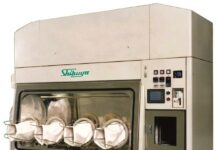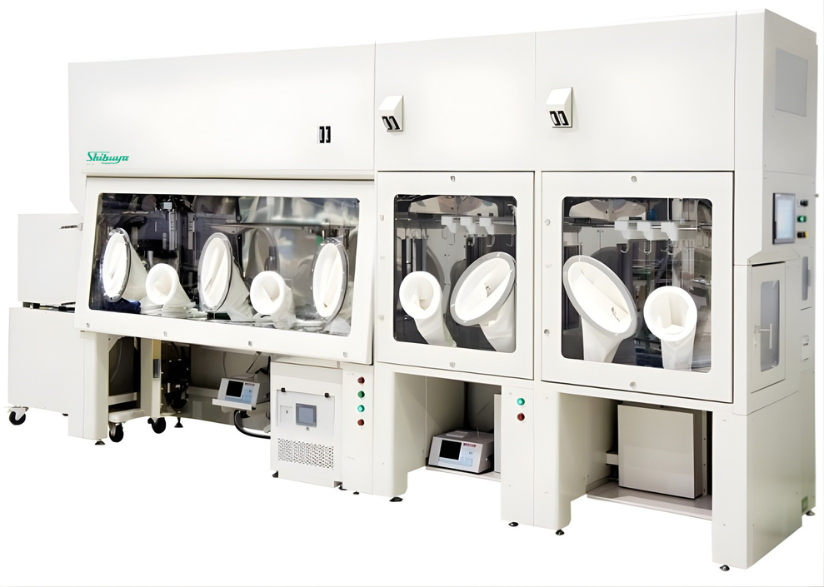
Shibuya Corporation, a global leader in precision engineering and advanced automation for sterile parenteral manufacturing, is showcasing its Cell Processing Isolator (CPi)—a regenerative medicine manufacturing system designed to create a highly optimized, contamination-free, and fully aseptic environment for cell processing within advanced isolator platforms.

Shibuya’s cell processing isolators are intended to pave the way for commercialization of regenerative medicines and cellular therapies without requiring a traditional laboratory clean room Cell Processing Center (CPC) production unit. The products enable cell culture and cell processing to be conducted in a fully separative isolator environment to better ensure optimum patient safety coupled with enhanced contamination control leading to maximum product yields.

Using the isolator based CPi approach, several CPi’s can provide independent Grade A/ISO 5 particulate air quality environments within the greater CPC ensuring that cultured cells are completely separated from technicians for optimum contamination control. This design removes the major source of contamination from the aseptic environment eliminating direct human interventions and dramatically reducing risk to product and patient.
It also enables the CPC to be Grade C, or in some cases Grade D, (where applicable regulations allow) which obviates the need for specialized gowning and de-gowning suites within the CPC and reduces the initial building costs of the facility, while at the same time reducing energy costs.
The CPi eliminates the need for a more complex CPC facility that would otherwise consume far greater space, require the use of sterile gowns in large numbers, and which lacks the strict contamination control for cell culture and processing that Shibuya’s isolator based CPi systems provide. These advancements result in a dramatic cost reduction both in terms of initial purchasing costs and ongoing operational costs compared to conventional manned cleanroom CPC facilities.
Its purpose-engineered unmanned and optimized aseptic environment significantly reduces running costs for cell cultures and cell processing by helping to lower validation workloads, energy consumption, and general operating costs and by reducing the risk of product loss due to contamination. This modern state of the art approach provides better contamination control, greater flexibility, higher patient safety all while reducing initial purchase and recurrent operation costs.
To support cell culture and processing operations, the CPi can be equipped with ancillary systems dedicated to closed, aseptic handling. An incubator for cell culture can be mounted and removed aseptically, making the system suitable for mass cell cultivation, while enabling full product traceability using electronic sensors. A built-in centrifuge with vaporized hydrogen peroxide (VPHP) decontamination is available for cell culture transfers for population expansion.
Microscopic quality assessment of cell morphology and cell viability inside the isolator is supported using video imaging microscopes. The system also includes a receiving section and associated isolator pass boxes for rapid transfer and extremely safe handling of critical sterile between the isolator and the surrounding environments. Modern work tracking and control systems also better ensure product security and safety providing both state of the art sterility assurance and optimized product segregation and tracking.
CPi’s incorporate Shibuya’s proprietary HYDEC vaporized hydrogen peroxide decontamination technology, developed by the company, to decontaminate the isolator and its contents. In addition, CPi’s can be equipped with fully configurable, menu-driven process control systems to manage and document all operational processes. To further enhance manufacturing execution and compliance support, the system can be combined with a manufacturing management system, a standard operating procedure (SOP) support system, and environmental monitoring systems for both the facility/factory and the isolator.
A remote maintenance system, equipment maintenance and management functions, and comprehensive cell processing facility engineering support are available to assure optimal long-term operation and lifecycle management. Validation support is offered to help ensure regulatory compliance as required, and users can select a CPi operational manufacturing flow suitable for their specific requirements.
Shibuya has 35 years of experience in isolator technology in industrial pharmaceutical and biopharmaceutical manufacturing, and this knowledge and experience was leveraged over fifteen years ago to develop isolator-based cell-processing systems named CPi. Shibuya has installed numerous CPi’s throughout the world.
These systems have been used to process various types of cells, including induced pluripotent stem (iPS) cells and autologous stem cells. CPi systems can be used for a variety of laboratory research, cell therapy product development and clinical scale manufacturing. Also available are developed systems, which are expandable using Shibuya developed transfer technologies to expand throughput. These systems have established a perfect record in terms of patient safety.
Shibuya Hoppmann is a recognized leader in automation systems and aseptic filling equipment, offering integrated solutions across beverage, dairy, personal care, household, pharmaceutical, and food markets. As a US subsidiary of Japan-based Shibuya Corporation, the company delivers precision-engineered bottling and packaging systems backed by expert local support. Known for engineering excellence and innovation, Shibuya Hoppmann serves high-performance industries with a commitment to long-term customer success.